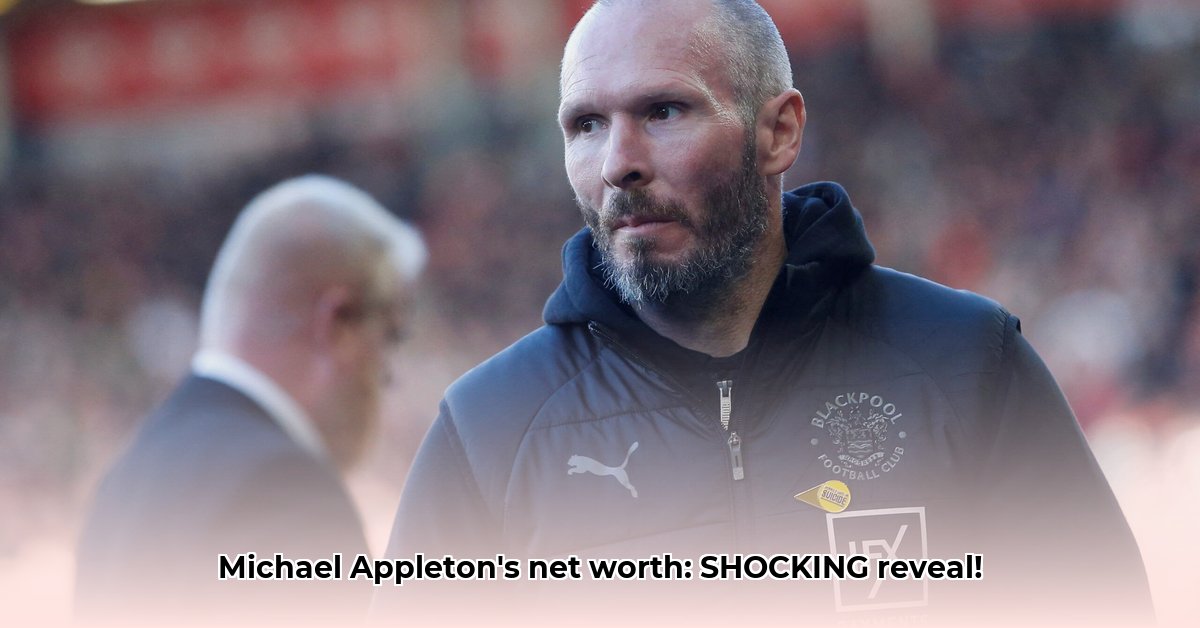
Michael Appleton's story is more than just a tale of wins and losses; it's a compelling narrative of resilience, adaptation, and the unpredictable nature of football management. While pinning down his exact net worth remains elusive – a common challenge when dealing with private financial information – exploring his career provides insight into the financial realities faced by many football managers. This journey, from a promising player to a seasoned manager, offers a fascinating case study in career evolution and financial success in the unpredictable world of football.
From Pitch to Dugout: A Career Defined by Resilience
Appleton's early life revolved around the beautiful game. He showed immense promise as a footballer. However, a significant knee injury abruptly ended his playing career. This devastating setback, far from ending his involvement in football, became a pivotal point. Appleton channelled his passion and knowledge into coaching, demonstrating determination and adaptability. This unexpected shift fundamentally changed the course of his life, launching a second chapter centered around management rather than playing. This transition also significantly impacted his financial trajectory, shifting his income stream from player's wages to managerial salaries and any supplemental income from media or other ventures.
The Managerial Rollercoaster: A Career of Varied Successes and Setbacks
Appleton's managerial career has been characterized by a dynamic blend of impressive successes and inevitable setbacks. His tenure at Oxford United, culminating in a well-deserved promotion to League One, showcases his ability to build and lead a team to significant achievements. Yet, his career also includes shorter stints at other clubs – a common experience among football managers. Why this inconsistency? The complexities of football management are widely acknowledged. Success isn't solely determined by a manager's tactical brilliance but is contingent on a multitude of factors including player performance, club strategy, boardroom harmony, and even a degree of luck.
Several factors may contribute to these varied tenures. Potential disagreements with club owners concerning player recruitment or tactical approaches could lead to shorter stints. The intense pressure in lower leagues, where even minor setbacks can have significant ramifications, also plays a part. Sometimes, it might simply be a matter of a mismatch in vision between the manager and the club's overall objectives. These fluctuating experiences have undeniably shaped his financial standing over the past years, creating a dynamic income stream.
Estimating Michael Appleton's Net Worth: A Realistic Assessment
Determining Appleton's precise net worth is inherently difficult. Publicly available financial data for football managers is largely unavailable. However, we can create a reasonable estimate. His various managerial positions, especially those in higher-level leagues, have likely contributed significantly to his overall wealth. Comparing his career trajectory and achievements with those of other managers with similar experience allows for some contextualization, though this comparison lacks complete precision.
Contract length and size are major determining factors. Some managers negotiate lucrative contracts with substantial performance-related bonuses, linked to achievements such as promotion or securing a specific league position. Beyond his base salary, additional streams of revenue, such as media appearances, endorsements, or TV punditry work, could significantly influence his overall financial status. However, the inherent lack of transparency regarding managers' financial details makes any estimate necessarily speculative, even with the most reasonable assumptions.
Key Influences Driving a Football Manager's Financial Success
A football manager's financial prosperity depends on several intertwined factors:
League and Club Status: Managers in top-tier leagues, such as the Premier League, earn considerably more than those in lower divisions, reflecting the increased revenue and media exposure of these leagues; the financial standing of the specific club is equally important.
Contract Length and Bonuses: Long-term contracts usually translate to higher base salaries, while performance-based incentives (bonuses) can substantially increase a manager's total earnings. Achieving targets such as promotion or European qualification triggers considerable bonus payments.
Endorsements and Media Work: High-profile managers sometimes receive lucrative endorsement deals from various brands. Additional income can be generated through media appearances, such as television shows or podcasts.
Isn't it fascinating how these elements combine to make up a manager's total earnings? Let’s break it down:
| Factor | Impact on Net Worth |
|---|---|
| League Level | Premier League offers the highest salaries; Lower leagues provide considerably less. |
| Contract Terms | Performance-based, long-term contracts result in highest pay-outs |
| Extra Income | Sponsorships, media work, etc., significantly increase total earnings |
The Future: Projecting Appleton's Career Trajectory
Appleton's future in management remains open to interpretation. Will he secure a prestigious, long-term position at a top-flight club? Or will he continue a career path marked by shorter, varied engagements? His track record indicates his capability to succeed at the highest levels. Future opportunities and his performance will strongly influence his financial status. His subsequent moves will either involve negotiating a long-term, high-paying contract or perhaps a transition to international management. Regardless of his choices, his future financial success is closely tied to achievements within the ever-evolving world of football management. The story of Michael Appleton exemplifies how financial success in professional sports requires talent, resilience, and a measure of good fortune.